The Racism Row – Reflecting On The Aftermath Of The Euro 2021 Final
July 23, 2021
By Buez HadguWith it over a week since England faced off with Italy in the Euro 2020 final, we can look back on the tournament with enormous pride. However, despite the progress shown by Southgate’s men in search for their first major trophy in over 50 years, the immediate aftermath was overshadowed by the recurring issue of racism in sport and wider society.
Sunday 11th July, England vs Italy at Wembley Stadium for The Euro 2020 Final. After 120 minutes of football couldn’t separate the nations, the result was to be determined by a penalty shootout. As Gareth Southgate went from player to player in the huddle – selecting the order of his takers; I couldn’t help but fear for the black members of the squad, should it be them that falls at the final hurdle.
When both Marcus Rashford and Jadon Sancho failed to convert their penalties, there was no doubt in my mind as to what would follow the full-time whistle, if Italy were crowned champions.
While Jordan Pickford did all he could to offer his teammates a reprieve, denying Jorginho the opportunity to score the championship winning spot-kick. However, it wasn’t enough, as – perhaps one of the bravest players of tournament – Bukayo Saka missed the fifth and final penalty.

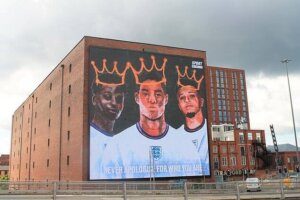
Almost instantly, under the social media posts of the three young, black stars, there was a barrage of racial abuse. Referencing their origin, the colour of their skin, and also the use of emojis with racist intent, the aftermath was vile. Frightening videos of violent scenes also began to circulate from within Wembley, as fans reacted in shocking nature, to what should have been a game remembered purely for footballing reasons.
An article by ‘The Week’ drew comparisons between the behaviour displayed by England fans at the final and the hooliganism that plagued the sport throughout the 80s and 90s. Many ticketless ‘fans’ had managed to gain entry to the stands at Wembley, after groups stampeded barriers at the ground, bypassing security.
While such scenes will likely reduce the chance of the rumoured 2030 World Cup bid for Britain and Ireland being successful, it invited the question of if football fan culture is regressing instead of progressing?
Although premature to conclude as such, there has definitely been a shift in fan attitude and engagement, especially with the growth of social media. Abuse on such platforms is at an all-time high and little is being done in order to combat that. This new-found habit of, predominantly racial, abuse via social media platforms is slowly becoming a new normal, and in the way they curbed the hooliganism through the introduction of legislation, those with power in football need to act swiftly.
Unity has been a huge factor in this tight-knit group reaching the nation’s first ever European final. The overwhelming support they received throughout the tournament showed how much supporters relate to these footballers. Whether it be England’s player of the tournament, Raheem Sterling, born just a stone throw away from the Wembley Stadium in Brent, or the young ages of Jude Bellingham and Saka – who impressed when featuring – there was diversity right through the Three Lions squad.
The London Migration Museum ran a campaign to highlight the importance of immigration and remind the supporters of the positive benefits the process has. #FootballMovesPeople highlighted the amount of first- and second-generation immigrants representing England, only three members of the side that beat Germany would have been involved without immigration.
Kae Kurd explained to BBC Radio 5 Live how Southgate’s squad renewed his sense of pride in the England National Team. This would have been achieved through their choice to continue to take the knee against racism, despite the booing and controversial reactions.
🗣️“It’s still coming home, we just never said when.” ⚽️
Comedian @KaeKurd tells @TherealNihal and @paulsinha this @England squad is the most connected he’s felt to the national team.
🎧 Listen on @BBCSounds pic.twitter.com/DTZGhTPLat
— BBC Radio 5 Live (@bbc5live) July 12, 2021
While social media has been held responsible for the abuse spouted on different platforms, it played a successful part in showcasing the England squad in a way that is engaging, allowing fans from up and down the country to relate and feel involved in the journey.
Throughout the tournament, the squad held itself in the best possible regarding, shining bright following the bleak times over the past year and a half. Unfortunately, the same cannot be said for the government in their support of the National Team.
In the lead up to the Euros, both Boris Johnson and Priti Patel failed to condemn English fans who booed the knee, a gesture used by the squad to highlight their anti-racism message. Politicians arguably encouraged the booing, with the misguided belief the action was politically motivated, and therefore played a part in weakening the message the squad tried to send out. Ironically, in response to the abuse following the final, both Patel and Johnson tweeted their support to the national side. Their comments just weeks prior hadn’t been forgotten by Tyrone Mings, who called the Home Secretary out for labelling the groups anti-racism message, ‘gesture politics’.
You don’t get to stoke the fire at the beginning of the tournament by labelling our anti-racism message as ‘Gesture Politics’ & then pretend to be disgusted when the very thing we’re campaigning against, happens. https://t.co/fdTKHsxTB2
— Tyrone Mings (@OfficialTM_3) July 12, 2021
MPs resorted back to their ludicrous ‘focus on football, not politics’ jibe in defence of Patel. Gary Lineker hit the nail on the head with his response, highlighting the hypocrisy of those in Parliament. Considering at the start of the pandemic MPs were criticising footballers for not doing their bit to support the NHS, it seems absurd to suggest they should now only concentrate on footballing issues, instead of trying to improve social issues for their communities.
So politicians can talk about football (particularly when they think they might bag a vote or two), but footballers shouldn’t talk about politics. Freedom of speech for all…except for those pesky footballers who should know their place. https://t.co/PNek9qiesw
— Gary Lineker 💙 (@GaryLineker) July 13, 2021
Despite all that has happened, the question remains how things can improve going forward? What can we do as a nation to combat racism and ensure it has no place in our game?
The Government has put plans in place to now extend Football Banning Orders to those who are abusive online, they have also increased pressure on social media companies to respond to the problems we are facing. While it’s positive to see some action being taken, Poet gave insight on his thoughts as he appeared on the weekly segment of football podcast ‘Filthy Fellas’.
Although football can be a great catalyst for change, he argued it wouldn’t be possible to eradicate racism in the sport if our society is yet to deal with it. Expecting racism to stop in the footballing world, while it is rife in the real world can only be described as wishful thinking. Poet stressed the importance of education and with the reach the sport has, it could be an avenue that those in power explore, as clubs could look to challenge preconceptions and stigmas at young ages.
Whilst it is a sad reality that this is unlikely to be the last incidence of its kind, it’s pivotal to realise the effects people’s words have on lives, and how damaged the beautiful game remains. This said, with continued focus on education, and punishment for shameful abuse, we can only hope that Bukayo’s recent words ‘love always win’ ring true in the near future.
This article was written by Buez Hadgu. To check out their other work click here or you can leave them a comment below.